
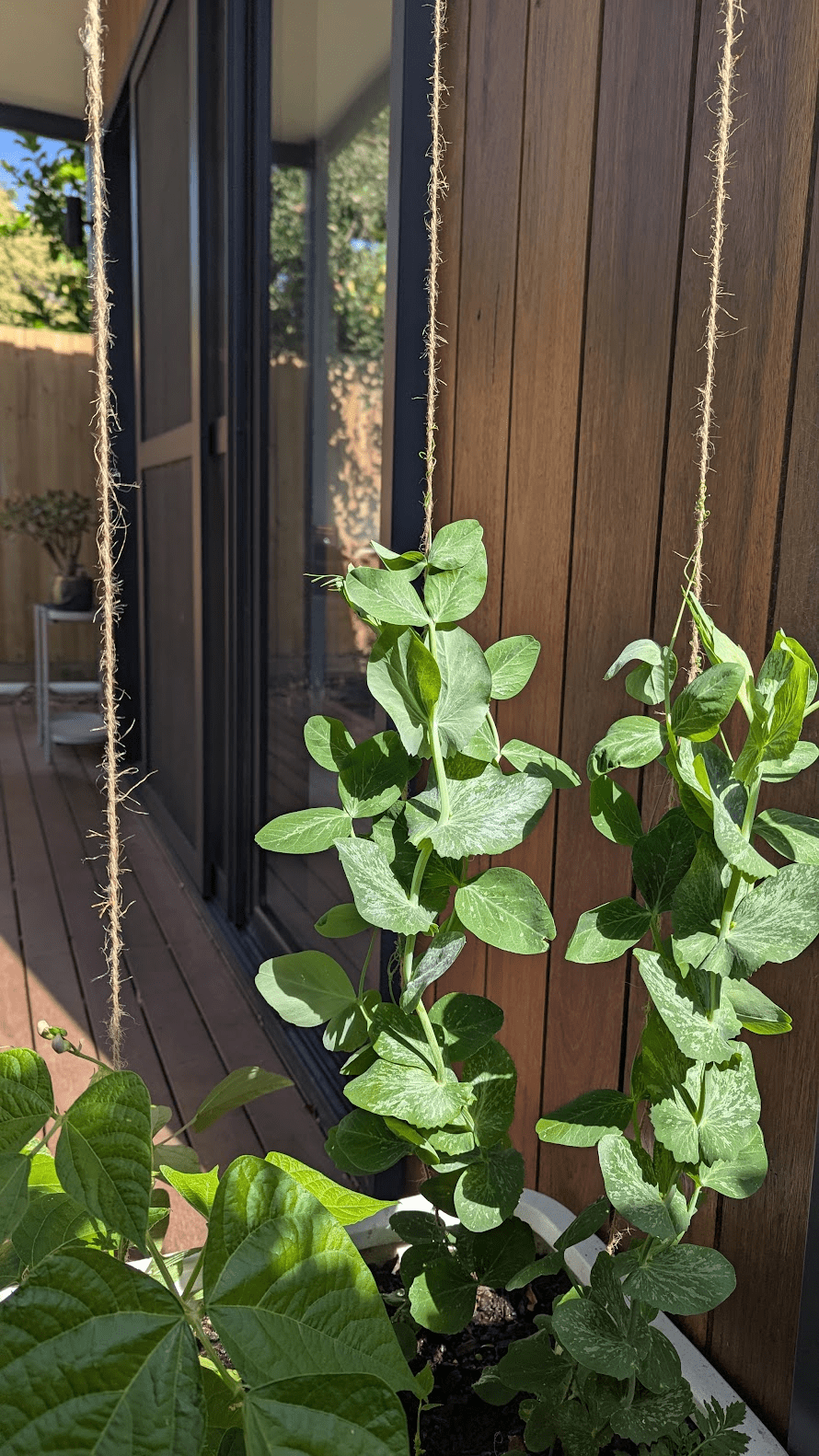
If you’ve spent any time on gardening Instagram, you’ll have seen them. The trellises. Beautiful, perfectly spaced, arched metal or handsome timber structures with climbing plants artistically draped over them like a woman in the Victorian era gracefully fainting onto the nearest couch. Plump bees hovering. Golden hour lighting. A linen apron. Live Laugh Love.
Which, if you have the money and space, well played. But most of us don’t – so I am here to tell you that none of that elaborate accoutrement that is required.
My garden has two trellising systems. One came from Bunnings. The other is a length from a ball of $3 jute twine tied to a tree branch. And yes, the latter is now my go-to.
I’ve thought about this a lot – possibly more than is healthy – and I’ve come to the conclusion that it’s not actually surprising. The jute system works better because it’s infinitely flexible, costs almost nothing, and can be adapted in real time as the plant grows (bonus: also biodegradable!). No structure you buy off a shelf can do all three of those things. My Grip and Grow from Bunnings is great (and I’ll get to that), but it is what it is – a fixed shape, a fixed size, doing a fixed job. Jute twine is whatever you need it to be.
Why Trellis at All?
Before we get into the how, the why is worth a quick moment.
Climbing and vining plants – tomatoes, cucumbers, snow peas, beans – want to go up. Left to their own devices they’ll sprawl across the ground, get tangled, sit in damp soil, develop all sorts of fungal problems, and make harvesting an exercise in extreme patience and bad language.
Get them vertical and everything improves. Better airflow. Less disease. Easier harvesting. More space. Happier plants. Happier gardener.
So trellis up and help your plants help you! Here are the two methods I use, and why the $3 jute twine is my fav.
Option 1: The Jack Grip and Grow (The One From Bunnings)
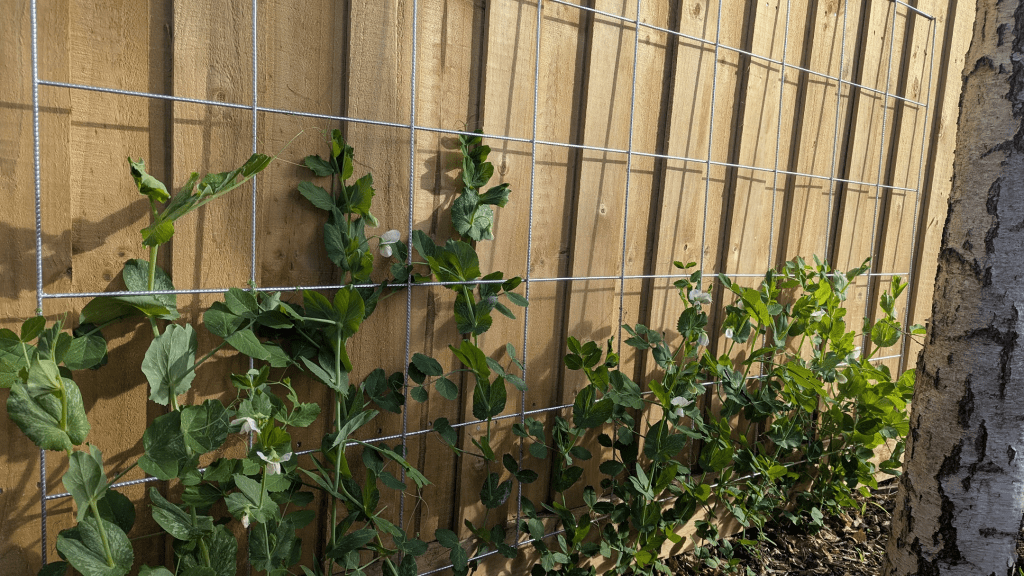
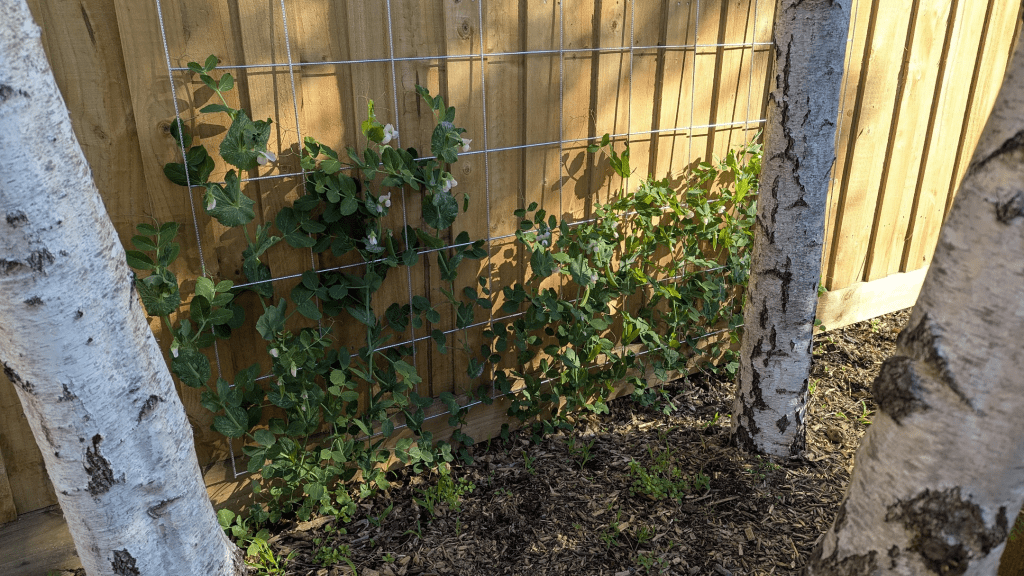
The Jack Grip and Grow is essentially a metal trellis panel – I use the 180cm x 100cm one and nailed it into my timber fence. Around $35-40 at Bunnings, its lightweight, reusable, and useful for the right plants.
What it’s good for:
- Snow peas and beans – they have little tendrils that grab onto grid-style structures instinctively, and the Grip and Grow gives them plenty to work with
- Cucumbers – same logic, and cucumbers grow vertically beautifully given half a chance
- Smaller climbing plants that want something to latch onto rather than be tied to
Its constraints:
It’s a solid, no-fuss option and worth having around for a sturdy option. But it has limits. It’s not enormous (or particularly cheap), so vigorous growers will outpace it by mid-summer and you might need to shell out for multiple. It’s a fixed grid shape, which means you’re working around it rather than it working around you. And for tomatoes – which need to be actively tied as they grow rather than self-climbing – it’s actually not the best tool for the job at all.
Option 2: The Jute Twine System (The One That Costs Almost Nothing and Works Better)
Jute twine. Tied to things. That’s the system.
I find something sturdy that’s already in or near the garden – a tree branch, a fence paling, a stake in the ground, a piece of timber left over from something else – and I tie a length of jute twine to it. Then depending on the plant in question, I either just twirl it around the plant stem (e.g. tomatoes), or tie the end of the length of twine at soil level to the base of the plant as an anchor point (e.g. cucumbers).
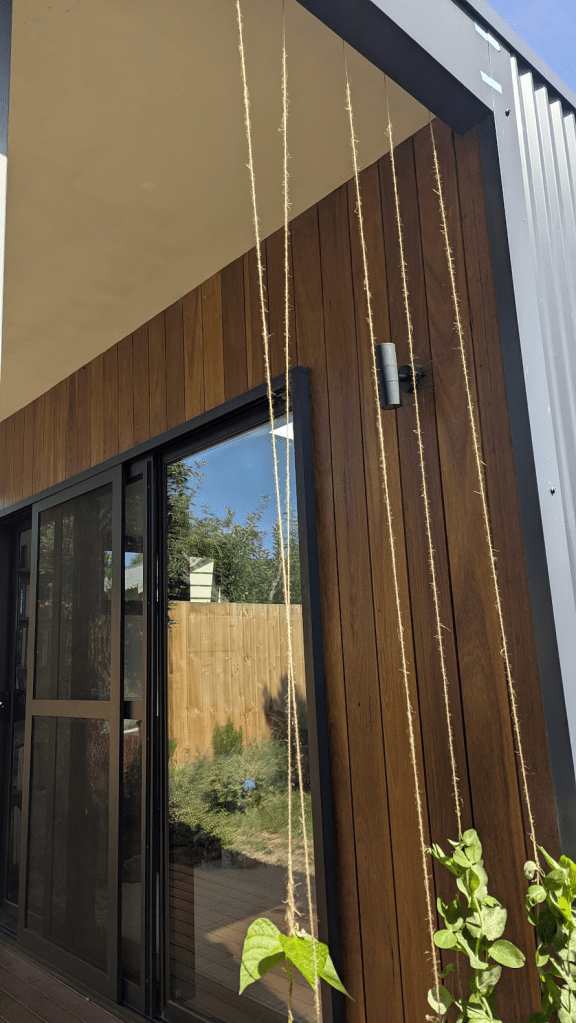
It looks a little improvised and rustic, which it absolutely is. But it works wonderfully for one simple reason: it goes where the plant needs it to go, not where the structure allows.
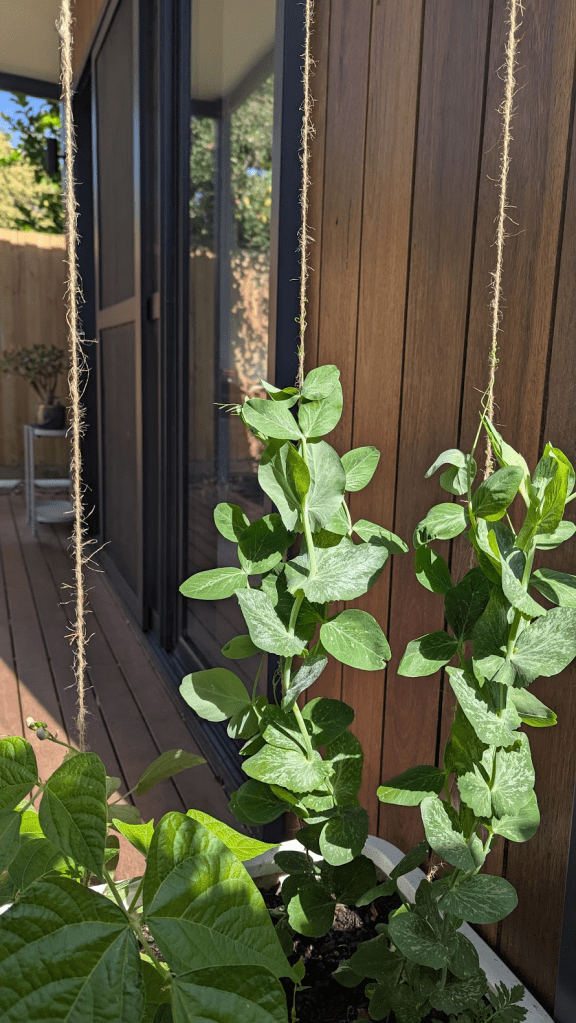
With a fixed panel, you’re hoping the plant grows in a way that suits the grid. With jute twine, you add a new line wherever the plant needs support that week. A branch is flopping left – run a new line there. A second stem needs support – add another string. The whole system evolves with the plant in real time, for approximately zero additional cost.
My favourite use case – tomatoes:
This is where the jute system isn’t just good, it’s the perfect tool for the job in a way nothing else is.
Tomatoes don’t have tendrils. They can’t self-climb the way peas can. They need to be actively tied to their support as they grow, which means you need to be able to add new tie points at any height, in any direction, as the season progresses. A fixed panel simply can’t do that. Jute twine can do exactly that, every single time.
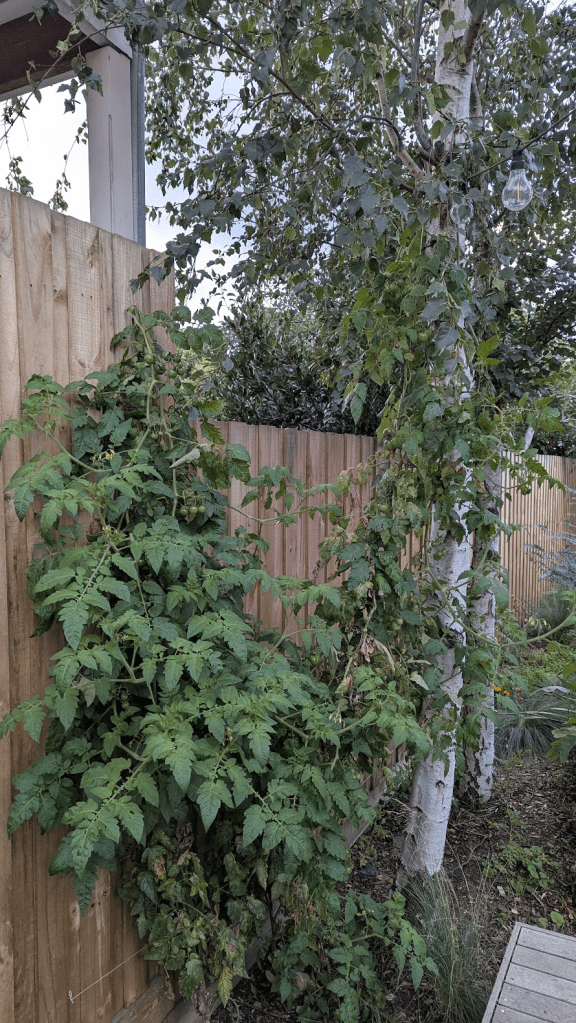
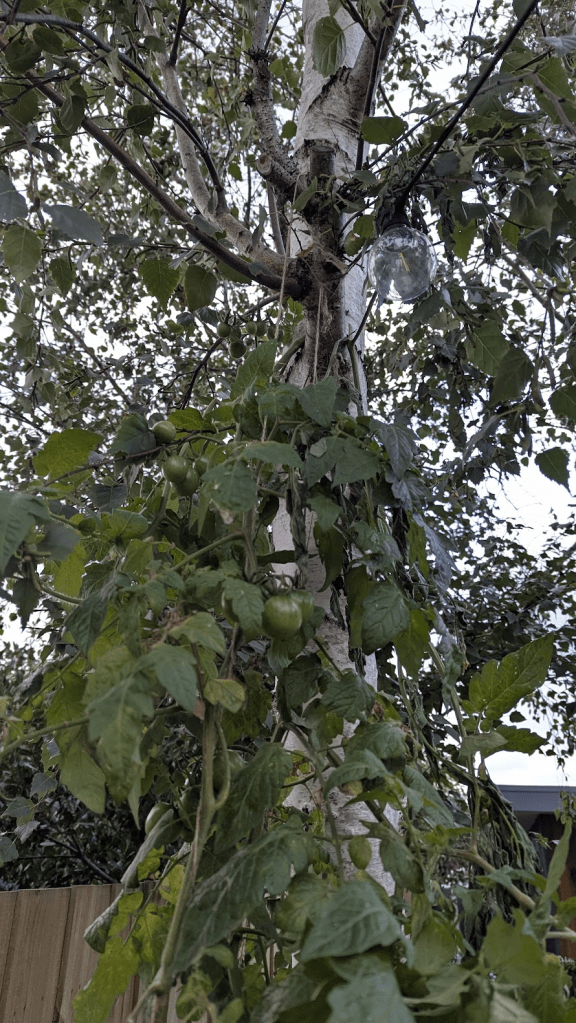
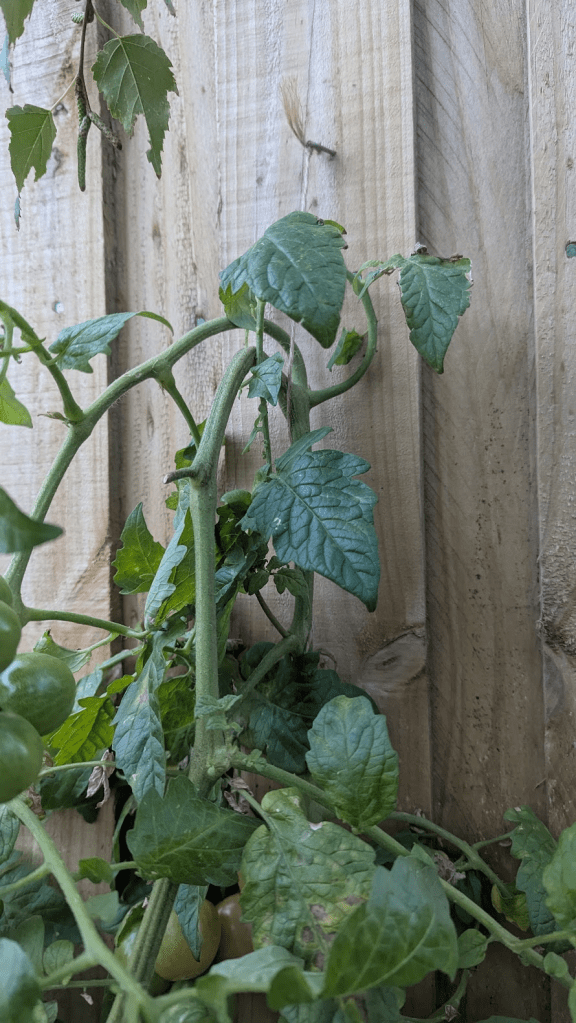
I tie a long length to the nearest tree branch (this is where growing in pots is helpful – you can move them around to suit the new aerial dynamics required!), then just twirl the twine downward around the main stem of the tomato plant maybe ~8-10 loops. Tomato stems are “sticky” and it’ll hold without you even needing to knot it off at the end. Then, as the tomato keeps growing, just keep twirling the stem around the twine that’s already hanging from the branch.
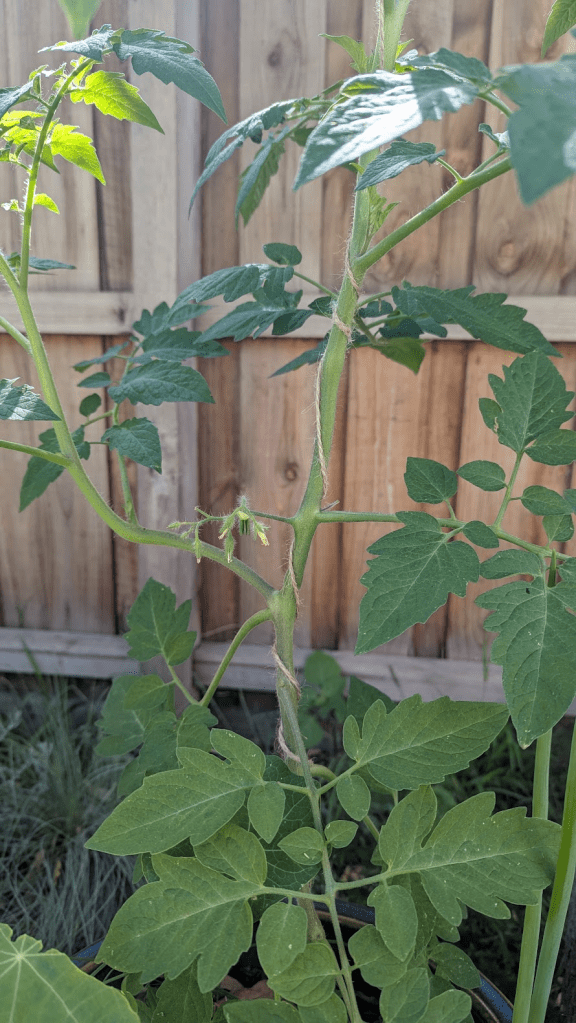
The practical bits:
- Tie loosely – the plant needs room to grow and thicken. A tight tie will cut into the stem over time. A gentle loop is all you need.
- Jute is biodegradable – at the end of the season, cut the whole thing down and compost it, plant material and twine together. No untangling, no sorting, no fuss.
- Work with what’s already there – a tree branch at the right height is just as good as a purpose-built post. Anything stable is fair game.
💡My Urban Patch Take
Look, I’m not going to pretend the jute system is pretty. Right now, my tomato setup looks completey unhinged – like a Blair Witch installation being wooed by a rather amorous spider. There are strings going in directions I don’t fully remember tying. As the photo evidence below would attest to.
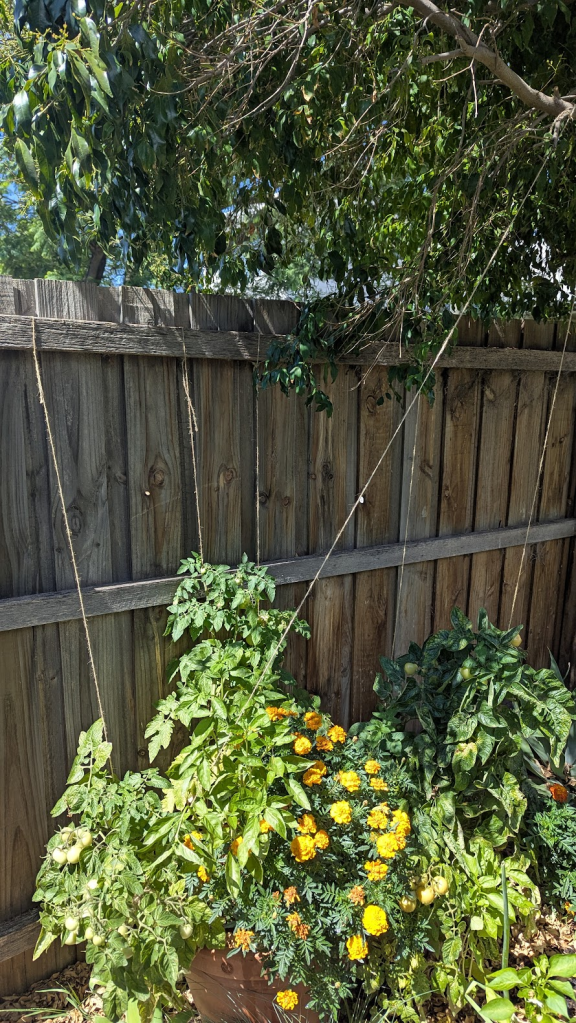
But I wouldn’t change it for a thing. The plants are supported, the airflow is great, the tomatoes are thriving, and at the end of the season I cut the whole lot down and throw it in the compost without a second thought.
Buy the jute. Embrace the chaos. Live Laugh Love It.
What’s your trellising situation – bought, DIY, or a combination of both? Tell me in the comments. Bonus points if you’ve used something truly unexpected as a support structure (…haven’t we all, ammirite).


Leave a Reply