

Grow Guide: Growing Capsicum in Your Urban Garden
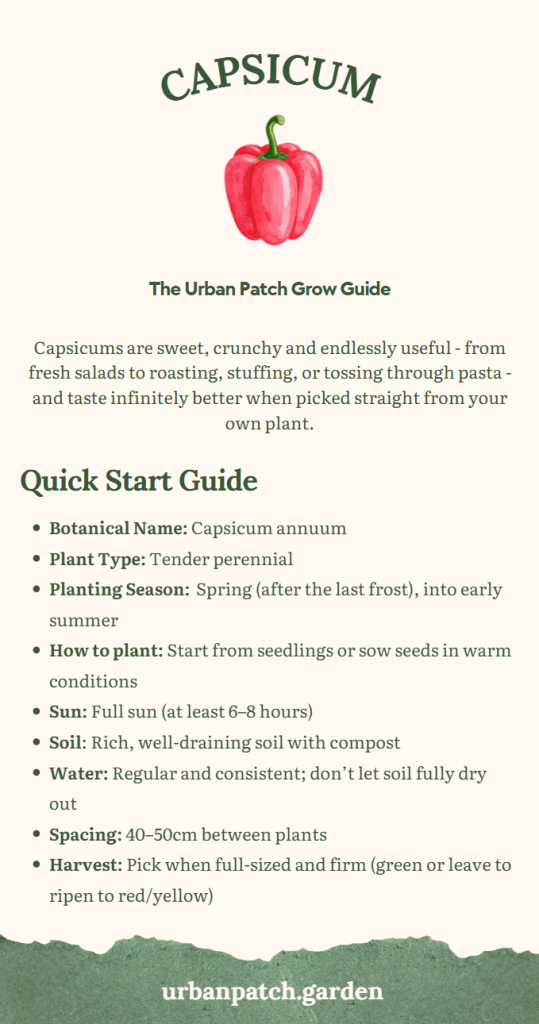
Capsicum is one of those plants that rewards a little patience with an abundance of colour and flavour come summer. Slow to get started and fussy about the cold, but once the warm weather arrives and they hit their stride – they go absolutely gangbusters. Sweet capsicums, mini snacking varieties, or the hotter end of the spectrum – all grown exactly the same way.
🕰️Best Time to Plant
- Spring to early summer: Capsicum needs warm soil and warm nights to thrive. In Melbourne, aim to plant seedlings out from mid-October onwards, once the risk of cold nights has well and truly passed.
- Start seeds indoors early: If raising from seed, start them indoors 8–10 weeks before you plan to transplant – capsicum is slow to germinate and needs a long growing season to produce well.
- Avoid planting out too early: Cold soil stresses capsicum and stunts growth. A plant put out too early will just sit there sulking while one planted a few weeks later in warmer conditions races past it.
📍Where to Plant
- Full sun: Capsicum wants a minimum of 6–8 hours of direct sun daily – more is better. A north-facing spot is ideal in Melbourne.
- Warm, sheltered position: Protection from strong winds helps, especially when the plant is flowering and setting fruit. A sunny courtyard or against a north-facing fence will do well.
- Well-draining, rich soil: Capsicum is a hungry plant. Work compost or well-rotted manure through the soil before planting, and make sure drainage is good.
- Containers: Capsicum does very well in pots – a 30–40cm pot per plant is ideal. This also lets you move them to chase sun or bring them undercover if a cold snap hits.
🧑🌾How to Grow
- Raise seedlings indoors: Sow seeds in a seed tray with quality seed raising mix, keep them warm (a sunny windowsill or a heat mat helps enormously), and be patient – germination can take 2–3 weeks.
- Harden off before transplanting: Introduce seedlings to outdoor conditions gradually over a week before planting out. Don’t skip this step – capsicum seedlings are sensitive beasties.
- Spacing: Plant 40–50cm apart in garden beds to allow good airflow and room to grow.
- Stake early: Capsicum plants get top-heavy when laden with fruit. Put a stake in at planting time and tie loosely as the plant grows.
💧Watering & Feeding
- Consistent watering: Capsicum likes even moisture – not wet, not dry. Inconsistent watering is one of the main causes of problems (including blossom drop and poor fruit set). Water deeply and regularly, especially once fruiting begins.
- Water at the base: Keep foliage dry to reduce the risk of fungal issues.
- Fertilising: Feed with a potassium-rich fertiliser (like a tomato fertiliser) once flowering begins. Before that, a balanced fertiliser every 3–4 weeks keeps growth strong. Avoid over-feeding with nitrogen early on – you’ll get a beautiful leafy plant and very little fruit.
🍽️Harvesting
- When to harvest: Capsicum can be harvested green (earlier, slightly bitter, still delicious) or left on the plant to ripen fully to red, yellow, or orange – sweeter and more nutritious, but requires more patience and a longer growing season.
- How to harvest: Use scissors or secateurs to cut the fruit from the plant rather than pulling – capsicum stems are brittle and you can easily snap a whole branch.
- Keep picking: The more you harvest, the more the plant produces. Don’t let fully ripe fruit sit on the plant too long or it signals the plant to wind down production.
😱Common Problems (and Fixes)
- Blossom drop: Flowers appearing and then dropping off without setting fruit is usually caused by temperature stress (too hot, too cold, or a sudden swing), inconsistent watering, or poor pollination. Give them a gentle shake when flowering to help with pollination, and keep watering consistent.
- Slow growth / sulking: Almost always a temperature issue. Capsicum simply won’t perform in cold soil. If your plant looks like it’s doing nothing, it probably just needs warmth and time.
- Aphids: A common pest on capsicum, particularly on new growth. Blast off with water, use an organic insecticidal soap, or rely on companion planting (basil nearby helps deter them).
- Sunscald: White or papery patches on fruit exposed to intense direct sun. Provide some afternoon shade during extreme Melbourne heat events if you can.
👋Best Companion Plants:
- Basil → Deters aphids, thrips, and spider mites, and enjoys the same warm, sunny conditions.
- Parsley → Attracts beneficial insects that prey on common capsicum pests.
- Carrots → Good use of space and don’t compete aggressively for the same nutrients.
- Spinach → Can be tucked in at the base to use the shade capsicum provides as it matures.
💡My Urban Patch Take
Capsicum is one of those plants I always underestimated – I assumed it would be fussy and difficult and probably not worth the effort in a small Melbourne garden. I was wrong. Give it a warm spot, consistent water, and a long enough summer and it will absolutely deliver. I grow mine in a a few different pots interspersed with its companion buddies. The snacking varieties (e.g. Mini Bell) are particularly good for small spaces – compact, prolific producers, and a sweet snack straight off the plant. Worth every bit of the wait.
(Need a little refresher before getting started on your capsicum journey? Check out my Urban Garden Beginner’s Guide: 4 Essentials to Get Growing Fast)


Leave a Reply