
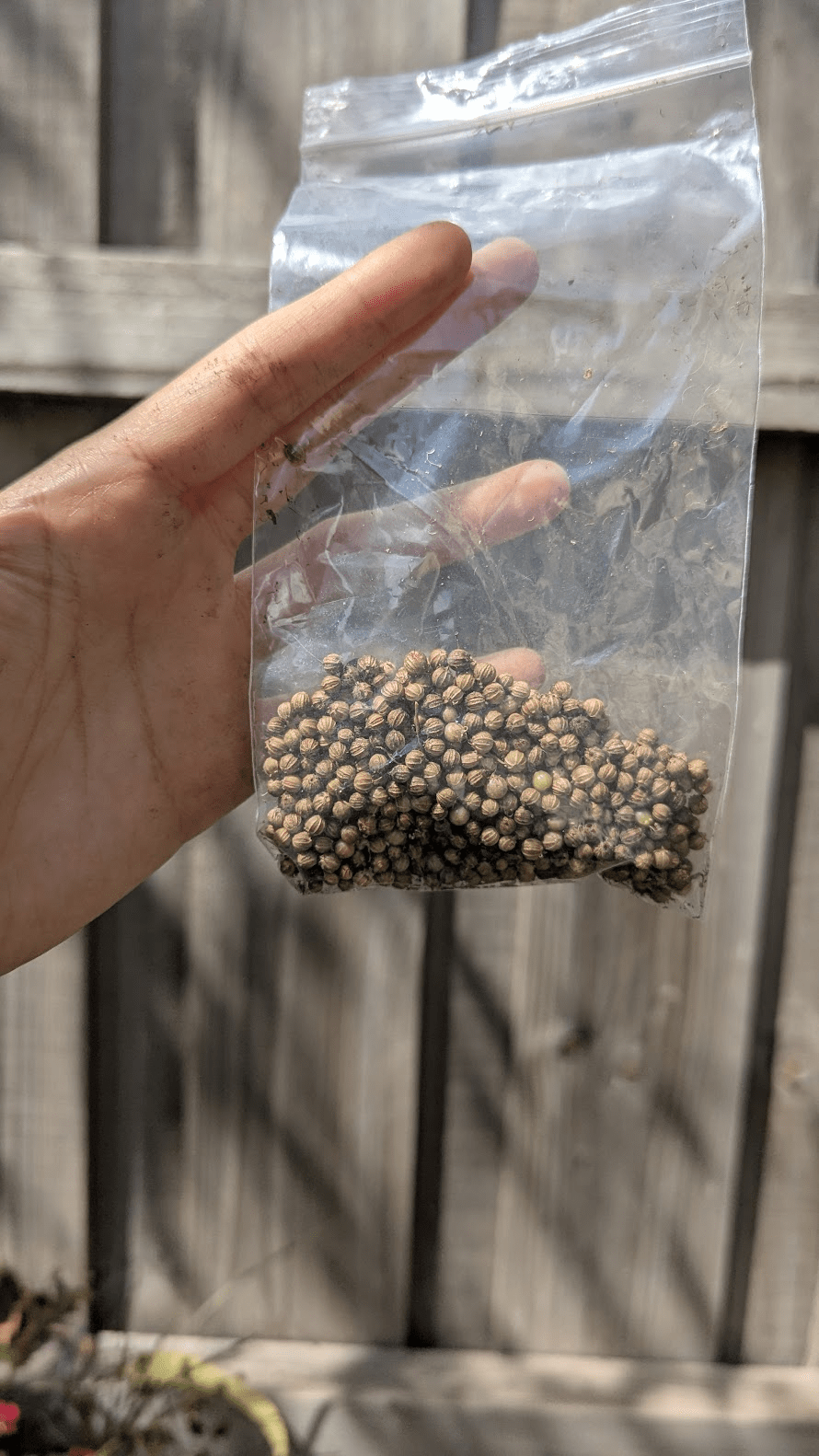
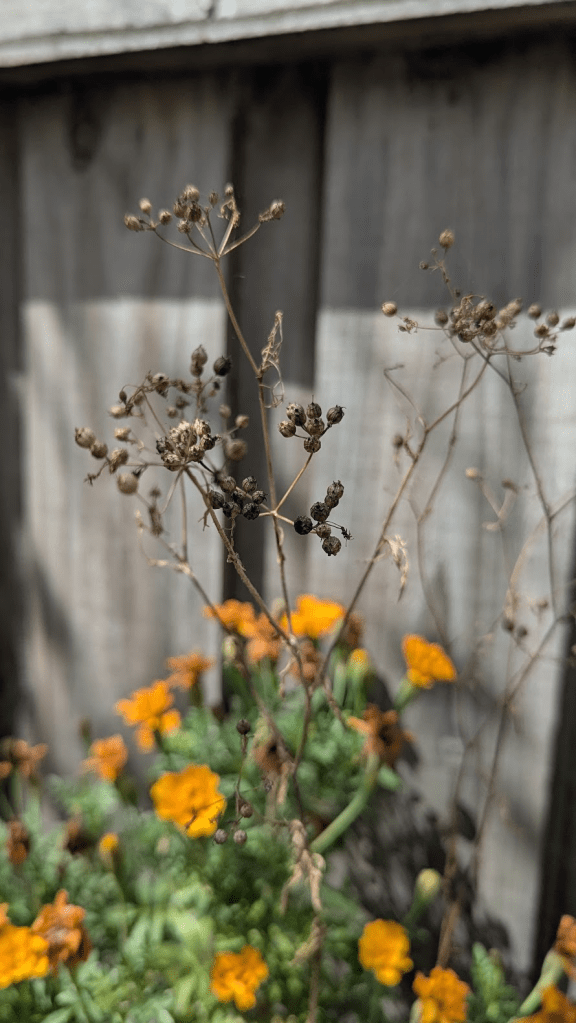
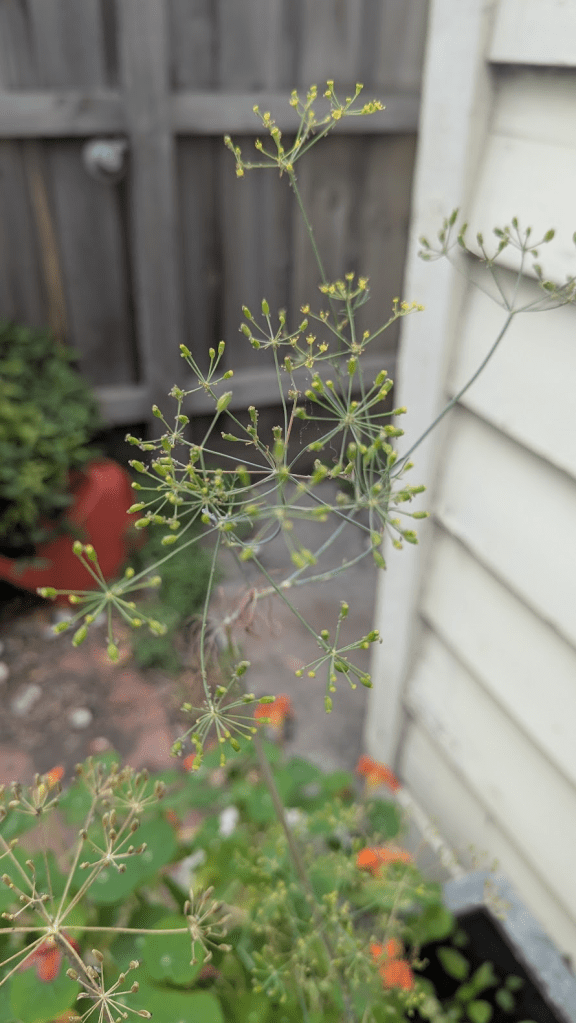
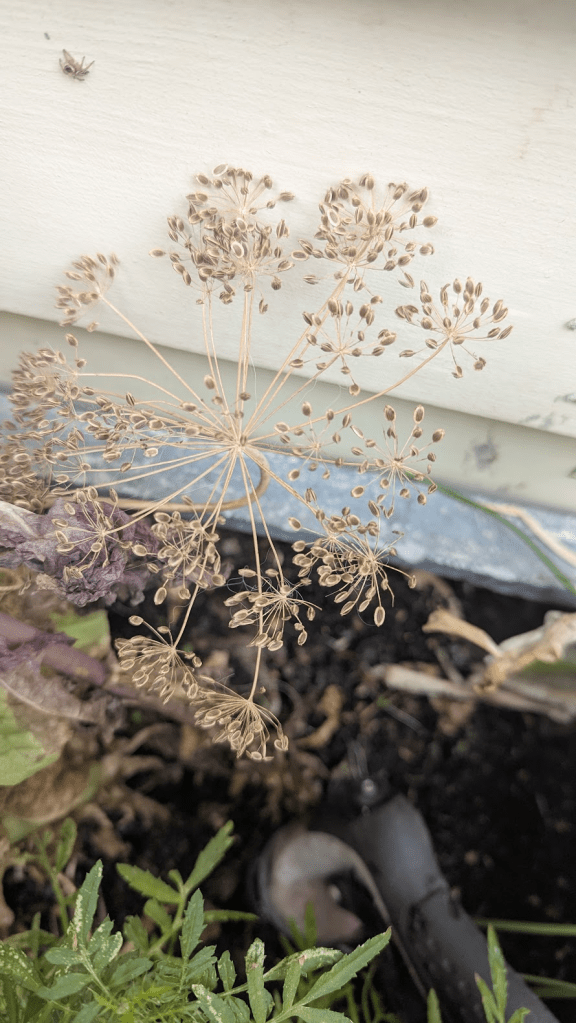
A few days ago I was pottering around the patch and ended up harvesting seeds from a coriander plant and a dill plant that had long since bolted and done their thing. It was the first time I’ve done this – usually I’d have removed these “end of life” plants and planted in something new without a second thought. However, thanks to several weeks of neglect, the coriander and dill had been left to do what nature intended – going to seed to continue their lifecycle.
I’m not sure why it felt so profound – perhaps cue existential crisis about the purpose of life and propagation. Or maybe a lifetime of beers is finally catching up to me. But standing there with that little pile of seeds in my palm – seeds that came from a plant that came from a seed – felt like something clicked. This was the full circle moment of gardening.
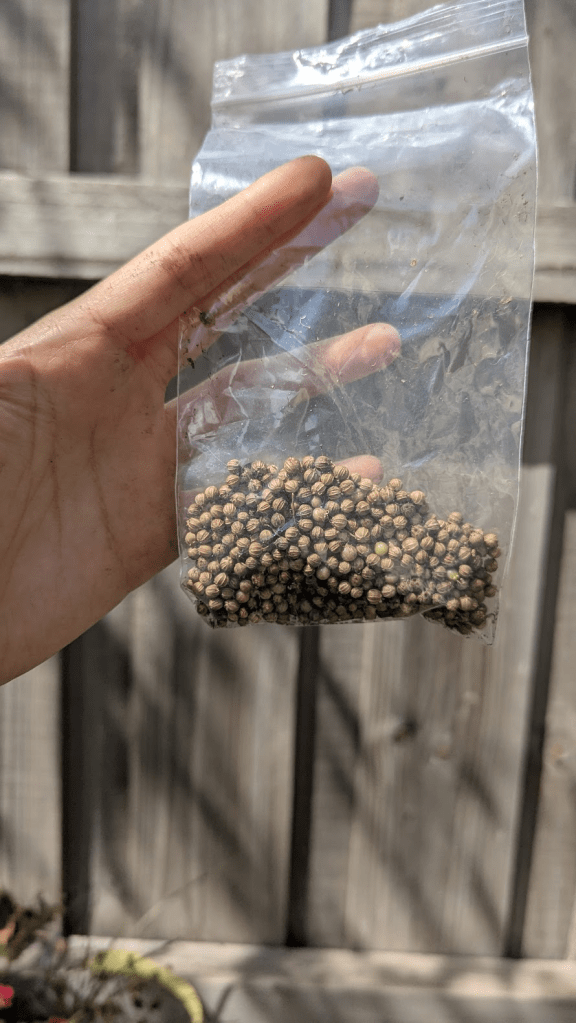
So, let’s take a closer look at the cycle of seeding, and some tips on harvesting and storing them.
🌀 The Cycle, Explained
Previous gardening lore instilled in me the belief that a plant going to seed was a failure. But it’s not – it’s the plant completing its entire purpose.
Annual vegetables and herbs – coriander, dill, basil, lettuce, beans, tomatoes – are wired to do one thing: grow, flower, set seed, and die. The vegetable or herb we harvest is almost a side effect of that mission. The plant’s actual goal, from the moment it germinates, is to reproduce. (Love that for plants, hate that for Elon Musk).
Once you start thinking about it that way, a bolting coriander plant stops being a disappointment and starts becoming an exciting process, waiting for the flowers and seeds to appear.
So let your plants and herbs flower. Let the flowers go to seed. Harvest those seeds. Re-plant them. And suddenly you’ve got a garden that perpetuates itself – no trips back to Bunnings, no buying the same packet of seeds twice, no waste.
✂️ How to Harvest Seeds
The process is pretty simple and very satisfying.
Wait for the right moment. This is the most important step. You want to harvest seeds when they’re fully mature – not when the plant first starts setting seed, but when the seed heads have dried out and turned brown or papery on the plant. For coriander and dill, you’ll see the little round or ridged seeds go from green to tan to brown. That’s your window.
Choose a dry day. Harvest on a dry, sunny morning after any dew has burned off. Wet seeds are the enemy – they’ll mould in storage before you get a chance to plant them.
Cut the seed heads carefully. Snip the whole seed head or stem off rather than trying to pick individual seeds. Do this over a bowl or into a paper bag – errant seeds love to scatter where they’re not wanted (throwback to earlier Elon Musk reference).
Let them dry further if needed. Even seeds that look dry on the plant benefit from a few more days spread out on a piece of paper in a warm, airy spot indoors. Don’t use plastic – you want airflow.
Separate the seeds from the chaff. Gently rub the seed heads between your fingers over a bowl and the seeds will fall away. Then blow gently across the surface – the lighter chaff floats off, whilst the heavier seeds stay put. This feels extremely ye oldey worldey and excellent and like you’ll shortly be off to churn some butter.
📦 Storing Your Seeds
A little care here goes a long way.
- Paper envelopes or small paper bags are ideal. Label them clearly with the variety and date – future you will be very grateful.
- Keep them cool, dark, and dry. A drawer, a tin, or a dedicated seed box in a cool room. Away from heat, humidity, and direct light.
- Avoid the fridge unless you know what you’re doing – the temperature fluctuations when you open and close the door can introduce moisture.
- Most seeds stay viable for 1–3 years if stored well, though some (like onions and parsnips) are best used within a season. Coriander and dill seeds keep well for 2–3 years with no fuss.
Write the harvest date on every envelope. When in doubt about whether old seeds are still viable, do a quick germination test – put 10 seeds on a damp paper towel, fold it over, and leave it somewhere warm for a week. If more than half sprout, you’re good to go.
💡 My Urban Patch Take
There’s something about seed saving that makes the garden feel less like a series of individual projects and more like a living, self-sustaining ecosystem that you’re cultivating.
If you’ve got a bolting herb or vegetable in your patch right now, don’t pull it out. Watch what it does next. Let it flower, let it set seed, and then harvest those seeds with a little care and patience.


Leave a Reply