

Grow Guide: Growing Eggplant in Your Urban Garden
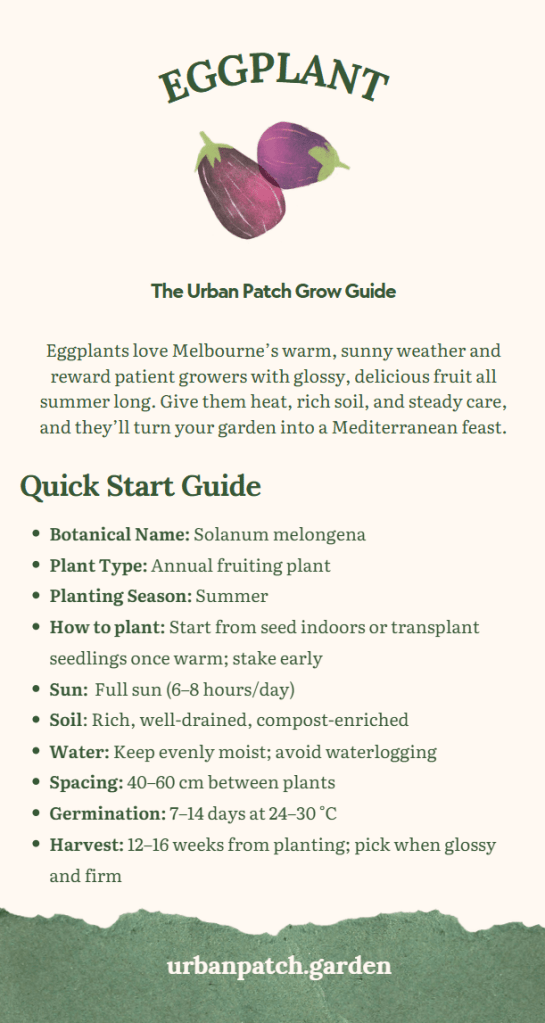
Eggplants (or aubergines, if you’re feeling fancy) are the sultry show-stoppers of the summer garden – glossy, heat-loving, and deeply satisfying to grow. They thrive in Australia’s warm months and reward a bit of care with shiny purple fruit that transforms into smoky, silky goodness on the grill or in a curry.
🕰️Best Time to Plant
- Late spring to early summer: Once night temperatures consistently stay above 15 °C (usually November in Melbourne).
- Avoid cold soil: Eggplants hate chill. If the soil’s still cool, start them indoors or in a mini greenhouse until conditions warm up.
📍Where to Plant
- Full sun: Needs at least 6–8 hours of direct sunlight daily.
- Rich, free-draining soil: Mix in compost, manure, or worm castings before planting.
- Warmth matters: Raised beds or dark mulch can help warm the soil early in the season.
🧑🌾How to Grow
- Seeds or seedlings: Start seeds indoors 6–8 weeks before the last frost (August–September), or buy seedlings to plant out in November.
- Transplanting: Harden off seedlings before planting outside. Space 40–60 cm apart, burying them to the first set of leaves for stability.
- Support: Stake plants early – heavy fruit can snap branches.
- Mulch: Apply straw or sugar cane mulch to retain moisture and regulate soil temperature.
- Pollination: Eggplants are self-pollinating, but a gentle shake of the flowers helps improve fruit set.
💧Watering & Feeding
- Consistent moisture: Water deeply 2–3 times a week; uneven watering can lead to small or misshapen fruit.
- Fertilise regularly: Use a balanced organic fertiliser every 3–4 weeks. Once flowering starts, switch to one higher in potassium for better fruiting.
- Mulching: Keeps roots cool and conserves water during hot Melbourne days.
🍽️Harvesting
- When to harvest: 12–16 weeks after planting, when fruits are glossy, firm, and the skin bounces back when pressed.
- How to harvest: Cut with secateurs, leaving a short stem attached – twisting can damage the plant.
- Keep picking: Regular harvesting encourages new fruit to form.
😱Common Problems (and Fixes)
- Aphids & spider mites: Spray with neem or insecticidal soap; encourage ladybugs.
- Flea beetles: Cover young plants with fine mesh until established.
- Blossom drop: Often caused by cold nights or water stress – maintain consistent watering and warmth.
- Slow growth: Usually from cold soil; hold off planting too early.
👋Best Companion Plants:
- Basil → Improves flavour and helps deter aphids and whitefly.
- Beans & peas → Add nitrogen to the soil, boosting eggplant growth.
- Marigolds → Repel nematodes and attract pollinators.
- Thyme & oregano → Great pest deterrents and compact enough to grow nearby.
- Spinach & lettuce → Thrive in the partial shade under taller eggplants.
- (Avoid: Potatoes, tomatoes, capsicums – all from the same Solanaceae family and share pests and diseases (like wilt and nematodes))
💡My Urban Patch Take
In my Brunswick backyard, eggplants get pride of place against the east fence where it gets the lovely morning sun. I stake them early, mulch thickly, and pair them with basil for both looks and taste. Watching the flowers turn into glossy purple fruit is one of summer’s small miracles – and yes, Odie insists on inspecting each one *sniff snoff*.
(Need a little refresher before getting started on your eggplant journey? Check out my Urban Garden Beginner’s Guide: 4 Essentials to Get Growing Fast)


Leave a Reply