

Grow Guide: Growing Cucumbers in Your Urban Garden
There’s something incredibly satisfying about plucking a fresh cucumber straight from your garden. Crisp, cool, and refreshing – like summer in edible form. They’re surprisingly easy to grow once you understand their quirks, and they absolutely love the warm Aussie months. The trick is giving them space to sprawl (or climb), plenty of sun, and a steady drink – kind of like your friend who thrives on attention and always has a beverage in hand.
🕰️Best Time to Plant
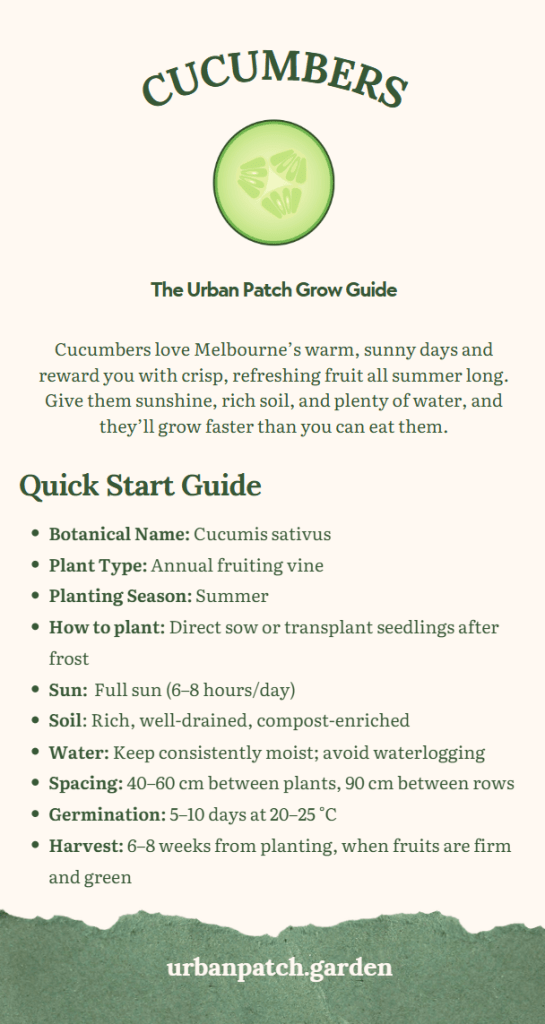
- Spring to early summer: Once the soil has warmed (above 18 °C), usually from late October through December in Melbourne.
- Avoid frost: Cucumbers are cold-sensitive – wait until all risk of frost has passed before planting outside.
📍Where to Plant
- Full sun: Needs at least 6–8 hours of sunlight a day.
- Rich, well-drained soil: Mix in plenty of compost or aged manure before planting.
- Space to sprawl or climb: Either give them ground room or a sturdy trellis – vertical growing saves space and improves airflow.
🧑🌾How to Grow
- Seeds or seedlings: Sow seeds directly where they’ll grow once soil is warm, or start indoors in biodegradable pots 2–3 weeks before transplanting.
- Spacing: 40–60 cm between plants, or 90 cm between rows.
- Transplanting: If using seedlings, plant them at the same depth they were growing in the pot – avoid disturbing roots.
- Mulching: Apply a thick layer of straw or sugar cane mulch to conserve moisture and keep fruit off the soil.
- Support: Train vines up a trellis, fence, or stake to save space and reduce disease.
💧Watering & Feeding
- Keep soil consistently moist: Cucumbers are thirsty – uneven watering causes bitterness and misshapen fruit.
- Morning watering: Helps prevent fungal diseases.
- Fertilising: Feed every 2–3 weeks with a seaweed or compost tea; switch to a potassium-rich fertiliser once flowers appear for better fruiting.
🍽️Harvesting
- When to harvest: Usually 6–8 weeks after planting, when fruits are firm, smooth, and bright green.
- How to harvest: Use secateurs or scissors to cut the fruit – pulling can damage the vine.
- Regular picking: Encourages new fruit to form.
😱Common Problems (and Fixes)
- Powdery mildew: Common in humid weather; improve airflow, avoid overhead watering, and remove affected leaves.
- Aphids & whitefly: Hose off or treat with organic soap spray.
- Poor fruit set: Encourage pollination by planting bee-friendly flowers nearby or hand-pollinating with a small brush.
- Bitter fruit: Usually caused by stress (heat, drought, irregular watering). Keep soil evenly moist.
👋Best Companion Plants:
- Beans & peas →These nitrogen-fixing plants enrich the soil, helping your cucumbers grow lush and strong.
- Corn → Provides natural shade and support for cucumber vines in hot weather.
- Lettuce & spinach → Grow well in the partial shade beneath cucumber trellises.
- Radishes → Repel cucumber beetles and take up little space.
- Marigolds & nasturtiums → Excellent pest deterrents that bring in pollinators too.
- Sunflowers → Act as living trellises and attract bees for better fruit set.
- (Avoid: potatoes, aromatic herbs (like sage or basil), melons and zucchini – they compete for nutrients and attract the same pests.)
💡My Urban Patch Take
In my Brunswick patch, cucumbers climb the side fence like they own the place. I let a few vines trail along the mulch under the tomatoes and train the rest up trellis netting to save space. The trick? Never let them dry out – a single hot day without water and they’ll sulk. Nothing beats slicing one straight off the vine for a backyard G&T.
(Need a little refresher before getting started on your cucumber journey? Check out my Urban Garden Beginner’s Guide: 4 Essentials to Get Growing Fast)


Leave a Reply