

Grow Guide: Growing Mint in Your Urban Garden
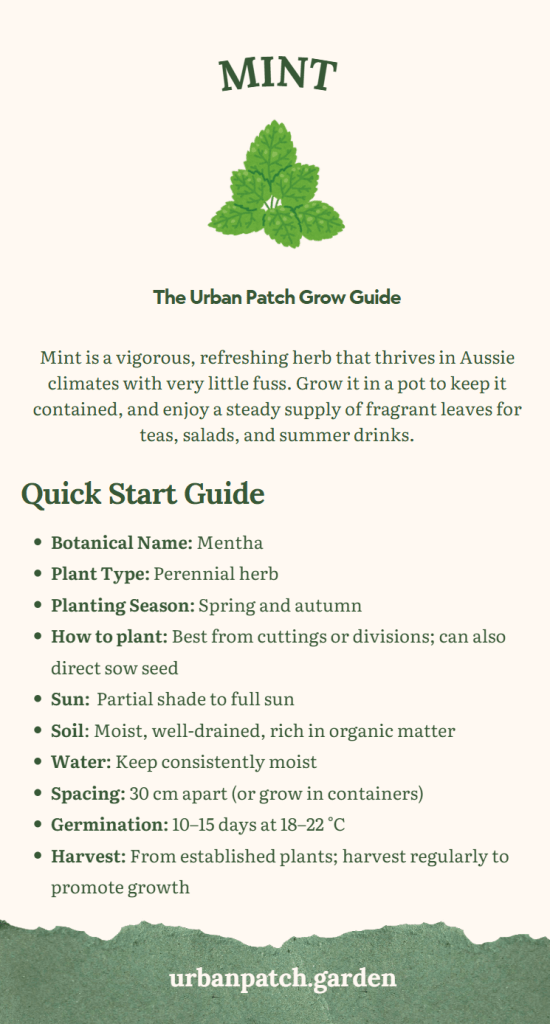
Mint is the cool, refreshing overachiever of the herb world. It’s hardy, fast-growing, and just about impossible to kill – which makes it both a blessing and a bit of a bully in the garden. From cocktails to teas and tabbouleh, mint is endlessly useful, and with a little containment, it can be one of the easiest herbs to grow in Melbourne.
🕰️Best Time to Plant
- Spring and autumn: Ideal seasons for planting mint in Melbourne.
- Year-round option: Because it’s so resilient, you can often establish mint almost any time of year, as long as extremes of heat or frost are avoided.
📍Where to Plant
- Partial shade to full sun: Mint grows in a wide range of light conditions, though partial shade helps keep it lush in summer heat.
- Moist, rich soil: Prefers soil that stays damp but drains well.
- Containment is key: Grow in pots, raised beds, or sunken containers to stop it spreading and taking over your patch.
🧑🌾How to Grow
- Cuttings or seedlings: Mint is easiest grown from cuttings or divisions, but seeds also work.
- Spacing: Give at least 30 cm between plants (or better yet, separate pots – mint grows like crazy and can easily overtake a space).
- Pruning: Regular trimming keeps it bushy and stops it getting leggy.
💧Watering & Feeding
- Water generously: Mint loves consistently moist soil – don’t let it dry out.
- Mulch: Helps retain soil moisture in hot weather.
- Feeding: Light applications of liquid fertiliser every few weeks will keep leaves lush and green.
🍽️Harvesting
- When to harvest: As soon as plants are established and producing healthy leaves.
- How to harvest: Pinch or snip stems just above a pair of leaves to encourage branching.
- Regular picking: The more you harvest, the better it grows.
😱Common Problems (and Fixes)
- Invasiveness: Mint spreads rapidly. Use pots or barriers to contain roots.
- Rust (fungal disease): Appears as orange spots on leaves. Remove affected leaves and improve airflow.
- Pests: Watch for aphids and caterpillars – usually manageable with hand-picking or organic sprays.
👋Best Companion Plants:
- Tomatoes → Helps deter aphids and whitefly.
- Carrots & beetroot → Mint can confuse pests like carrot root fly.
- Peas & beans → Improves growth and can help deter some aphid infestations.
- (Avoid: other mint, parsley, chamomile)
- Because mint spreads like wildfire, even with companions it’s usually best to keep it in a container near your other crops so you get the benefits without the invasion.
💡My Urban Patch Take
In Brunswick, my mint lives happily in a little pot by the back steps. That way Odie can sniff it, I can snip a handful for tea or salads, and it doesn’t run riot through the rest of the garden. Bonus: it makes the whole area smell fresh every time I brush past.
(Need a little refresher before getting started on your mint journey? Check out my Urban Garden Beginner’s Guide: 4 Essentials to Get Growing Fast)


 The Urban Patch
Leave a reply to KathrinS Cancel reply