
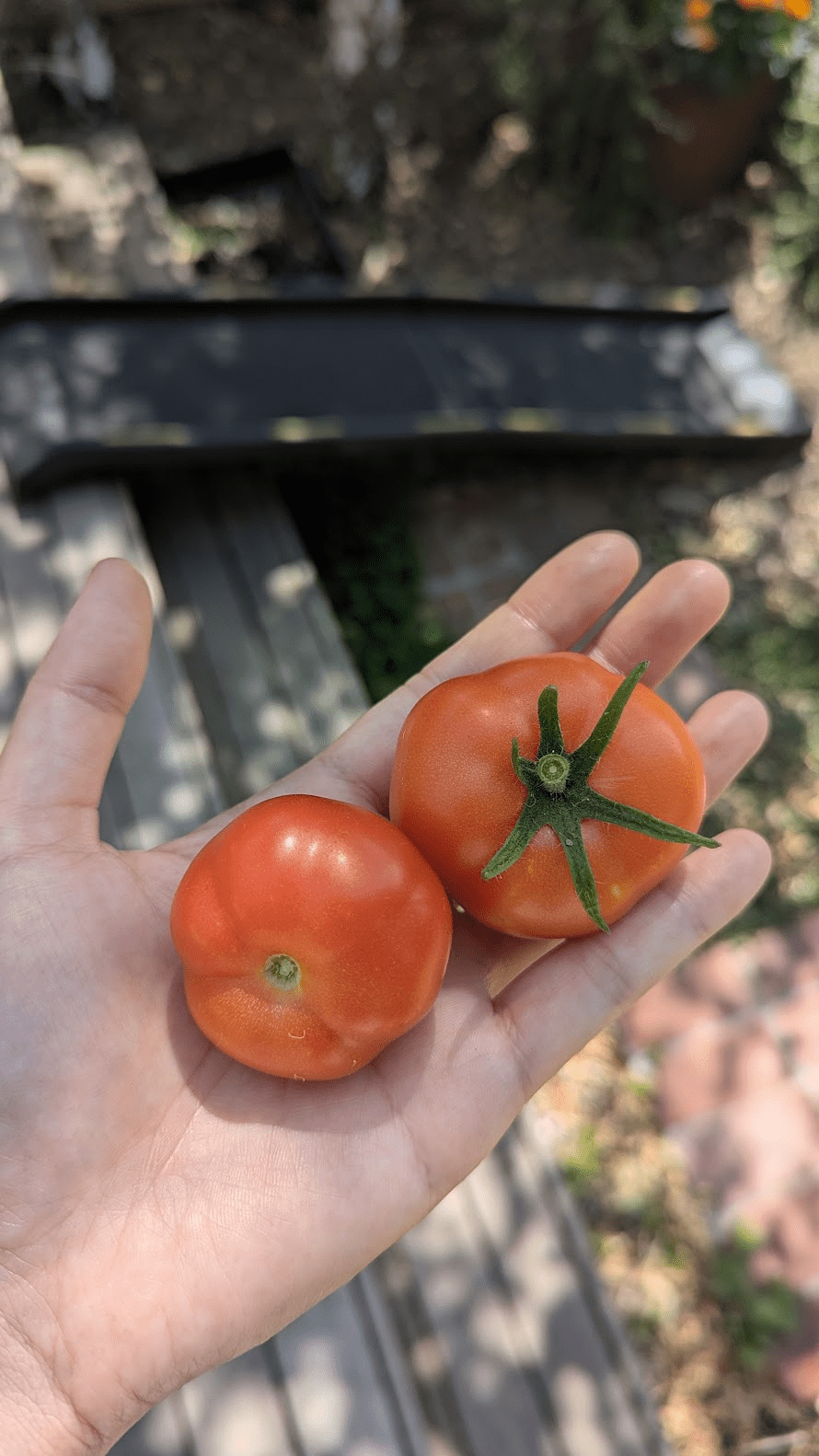
Tomatoes are generous little plants. Give them half a chance and they’ll try their best. But if you want vigorous growth, fewer sad yellow leaves, and actual tomatoes instead of just vibes, there are a handful of small things that make a huge difference.
These are my five go‑to moves in the Urban Patch – especially for small urban gardens, balconies, and Melbourne summers that love to swing wildly between perfect and what on earth is this weather.
No fancy gear, no tomato PhD required – just a little gentle intervention at the right time!
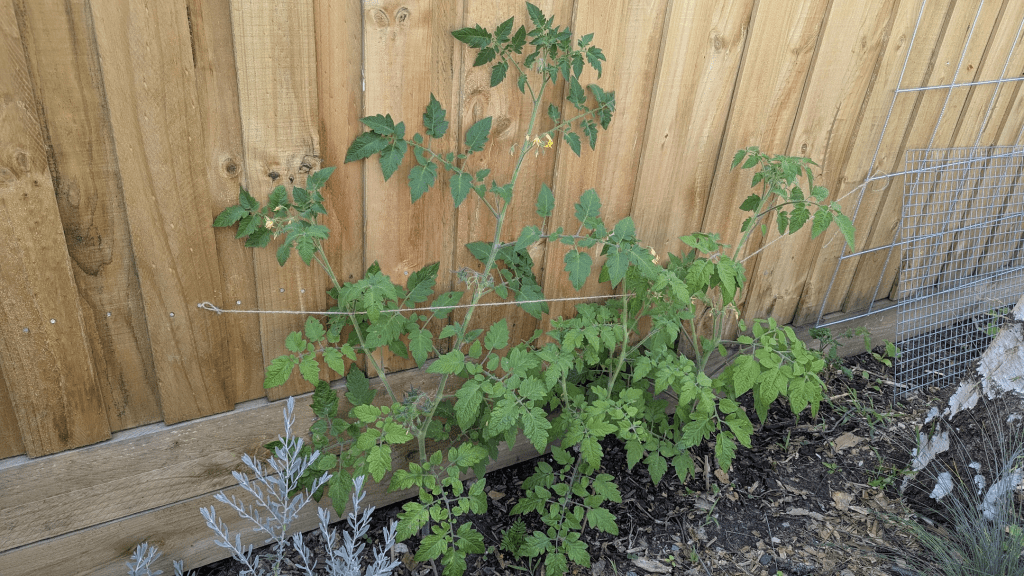
1. Stake Early (Earlier Than You Think)
This one is boring but critical.
Tomatoes grow fast, and once they start flopping around like a second hand car sale windsock it’s too late to do a neat job. Trying to stake a mature tomato plant is like trying to politely rearrange a drunk octopus – you’re just going to get thwacked in the face.
Why early staking matters:
- Prevents stem damage later on
- Encourages upright, strong growth
- Improves airflow (less disease)
- Makes pruning and harvesting much easier
In the Urban Patch, I stake seedlings as soon as they’re in the ground or pot – even if they look comically small next to the stake. They’ll grow into it within days.
Bonus tip: soft ties only. Old tights, jute, fabric strips, or garden tape. Support, not strangulation.
2. Tickle the Plant (Yes, Really)
This feels unhinged the first time you do it, but stay with me.
Gently brushing your hand over your tomato plants once a day helps stimulate stronger stems. It mimics wind and movement, which tells the plant to bulk up instead of growing leggy and fragile.
This is called thigmomorphogenesis, which is a very fancy word for ‘plants responding to touch’.
In small urban gardens – especially sheltered courtyards and balconies – plants often don’t get enough natural movement. A daily tickle fixes that.
I usually do this while watering, chatting to Odie, or pretending I’m not emotionally invested in the outcome.
Gentle is the key word here. We’re encouraging resilience, not starting a boxing match.
3. Shake the Flowers (Gently!)
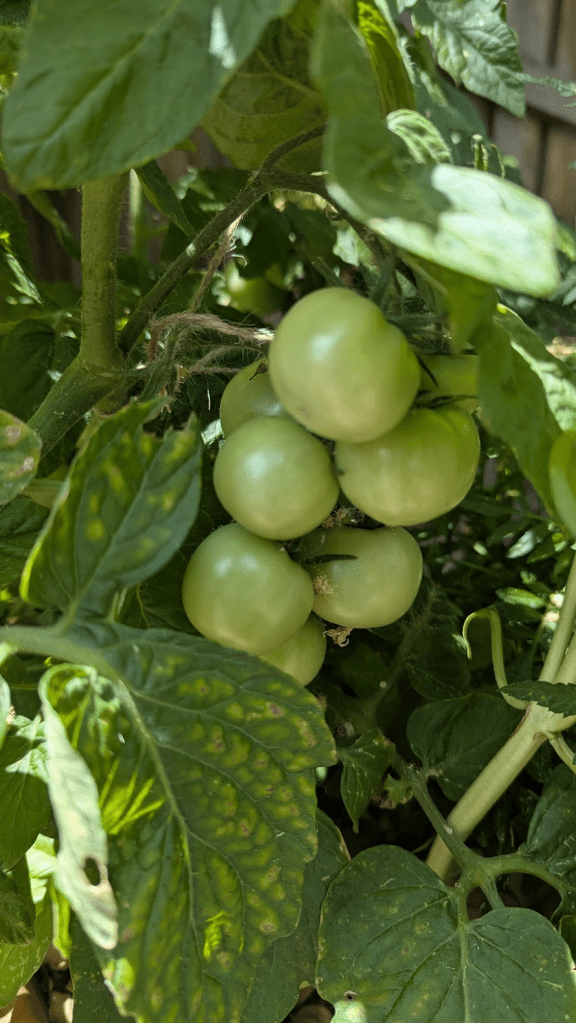
Tomatoes are self‑pollinating, but they still need movement to release pollen.
In nature, that comes from wind and bees. In urban gardens? Sometimes it comes from you.
When your plant starts flowering:
- Gently tap or shake the main stem
- Or lightly flick the flower clusters
- Do this every couple of days
This helps pollen drop inside the flower and massively improves fruit set – especially in still, sheltered spaces.
If you’ve ever had loads of flowers and very few tomatoes, this is often the missing link.
No need to overdo it. A polite little jiggle will do.
4. Feed Them Properly (Tomato Power Feed Is Your Friend)
Tomatoes are hungry beasts. Fast growth, lots of leaves, flowers, and fruit all take energy – and water alone won’t cut it.
Once flowering starts, I switch to a tomato‑specific fertiliser (like Tomato PowerFeed).
Why tomato fertiliser matters:
- Higher potassium supports flowering and fruiting
- Balanced nutrients prevent blossom drop
- Regular feeding reduces stress (and drama)
I feed every 1–2 weeks during the growing season, always onto moist soil.
Urban soils and pots get depleted fast, so consistency beats dumping a huge feed once and hoping for the best.
Think steady snacks, not one massive feast.
5. Prune (But Don’t Go Wild)
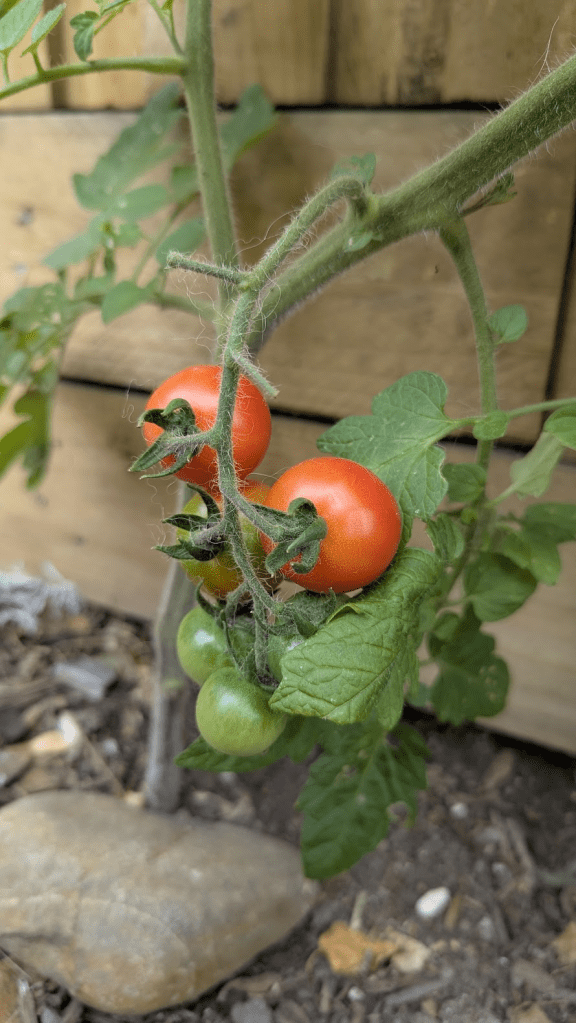
Pruning tomatoes isn’t about control – it’s about focus.
Removing excess growth helps the plant put energy into:
- Strong stems
- Healthy leaves
- Flowers and fruit (the good stuff)
What I prune:
- Suckers (the little shoots that grow between the main stem and branches)
- Yellowing or damaged lower leaves
- Any foliage touching the soil
In small spaces, light pruning improves airflow and reduces disease – a big win in humid Melbourne summers.
💡My Urban Patch Take
Great tomatoes aren’t about doing more – they’re about doing a few small things at the right time.
Stake early. Tickle your plants. Give the flowers a little help. Feed consistently. Prune with intention.
Tomatoes, like people, grow best when they’re supported and nourished. Then step back, and give them space to do their thing!
Happy growing 🍅
What’s worked and not worked for you? What tips are you keen to try? Let me know in the comments below!
 The Urban Patch
Leave a comment