
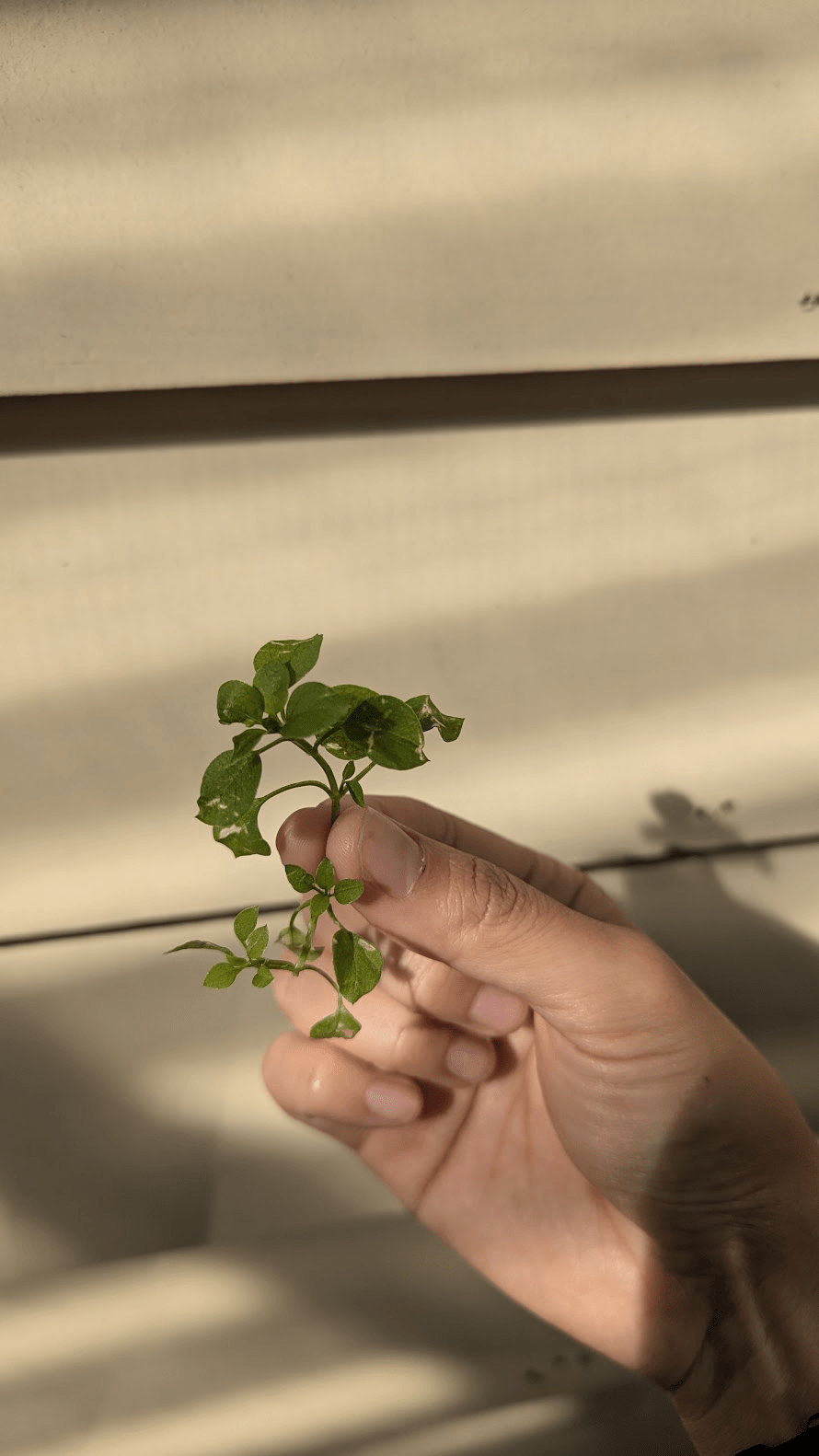
It’s spring – that magical time of year again in Melbourne when the rain and warming weather conspire to make everything in the garden…grow. Sadly, that includes the things we didn’t exactly invite in. The weeds are absolutely thriving at the moment – as if they’ve been handed a VIP ticket to the party and shown straight to the dance floor.
Everywhere I look, something green is pushing up between the mulch and native plants. Odie thinks it’s marvellous (more soft-ish surfaces to lie on), but I’ve found myself on my hands and knees muttering things that don’t sound very “friendly gardening blog” at all.
And right now, the star of the weed show in my urban patch is chickweed.
How to Identify Chickweed
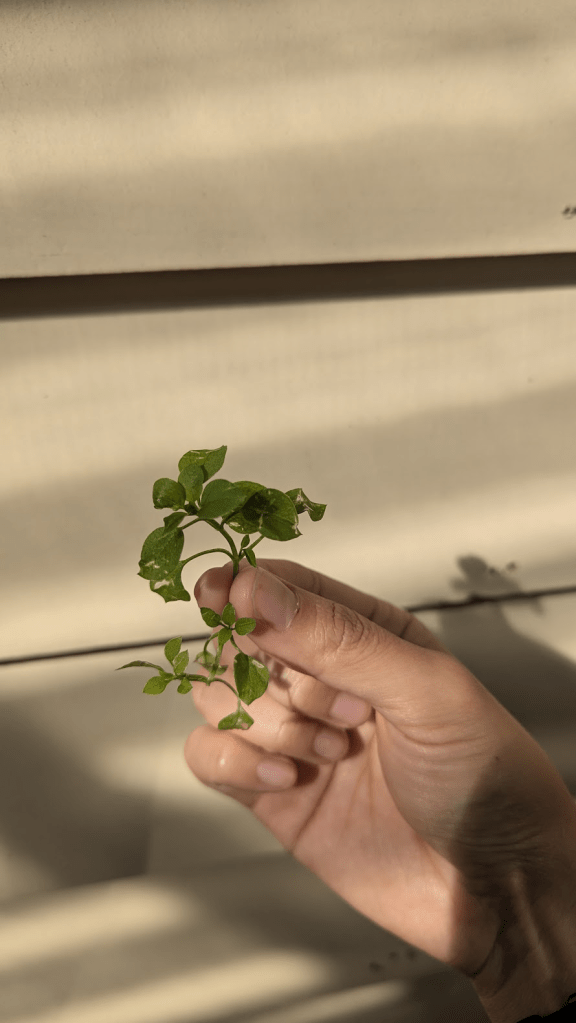
Chickweed (Stellaria media) is one of those weeds that looks almost sweet and innocent… until you realise it’s taken over half the garden bed. Here’s what to look for:
- Leaves: Small, soft, oval leaves that grow in opposite pairs.
- Stems: Delicate and sprawling, with a single line of fine hairs running along one side. The biggest clue? Break the stem and you’ll find a stringy white “bone” running through the middle – a tell-tale sign you’ve definitely got chickweed.
- Flowers: Tiny white, star-like flowers with five deeply divided petals (they look like ten petals if you don’t look closely).
- Growth habit: Low-lying and fast spreading, forming dense mats that smother your seedlings before you’ve even boiled the kettle.
The kicker? Chickweed is actually edible – packed with vitamins, used in salads and herbal remedies. But whether you treat it as free food or a freeloading invader depends on how zen you’re feeling about your garden that day (or brave about eating something that the dog probably peed on).
The Top 5 Most Common Urban Garden Weeds in Australia
Chickweed might be the current star in my patch, but it’s got plenty of company. Here are the other usual suspects most of us battle in our little urban jungles:
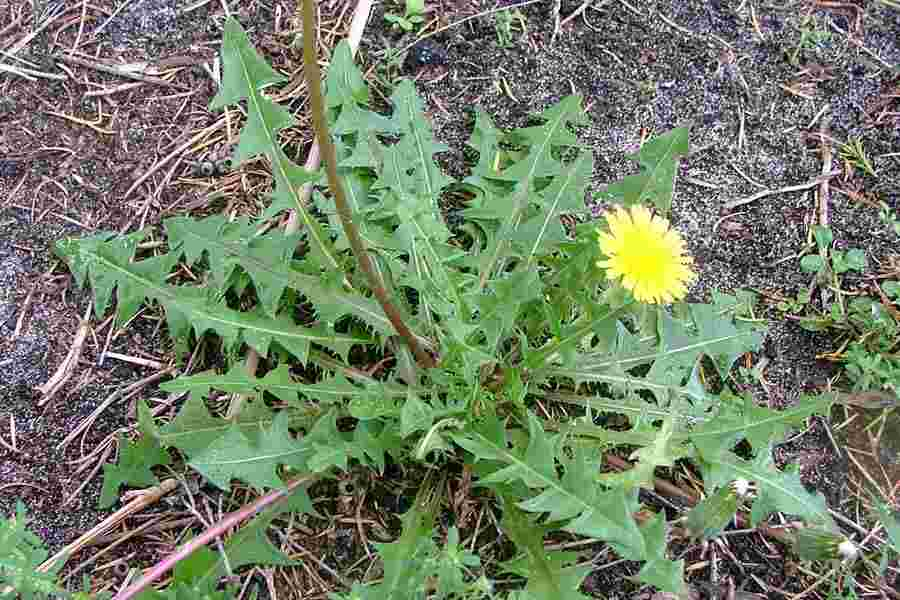
1. Dandelion
- ID: Rosette of jagged leaves, bright yellow flowers, fluffy seed heads kids love to blow (and gardeners hate).
- Tip: Deep taproots mean they bounce back if you don’t get the whole root out.
2. Oxalis
- ID: Heart-shaped clover-like leaves, often with yellow flowers.
- Tip: A nightmare in veggie beds – bulbs break apart if you try to pull them, so persistence is key. Although, these can look nice in a rustic, organic way so I don’t mind keeping a few around…

3. Couch Grass
- ID: Tough runners that creep through everything like a determined little green army.
- Tip: Digging out roots thoroughly is the only way – leaving even a scrap behind can start a new colony.
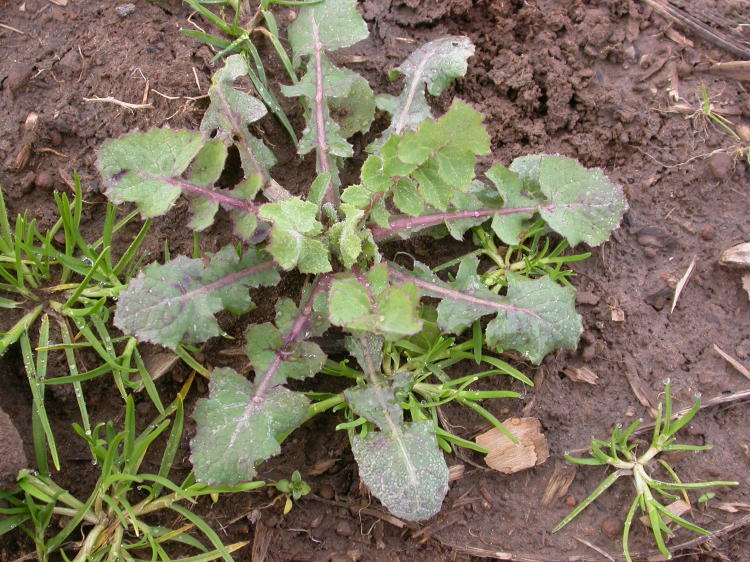
4. Milk Thistle
- ID: Soft thistle with jagged leaves and milky sap, yellow flowers that look a bit like dandelions.
- Tip: Easy to pull when young – don’t wait until it’s towering over you.
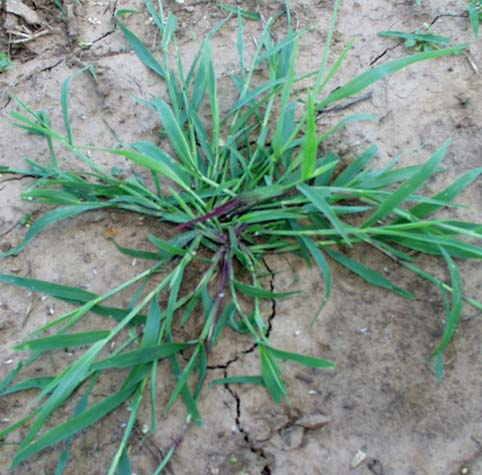
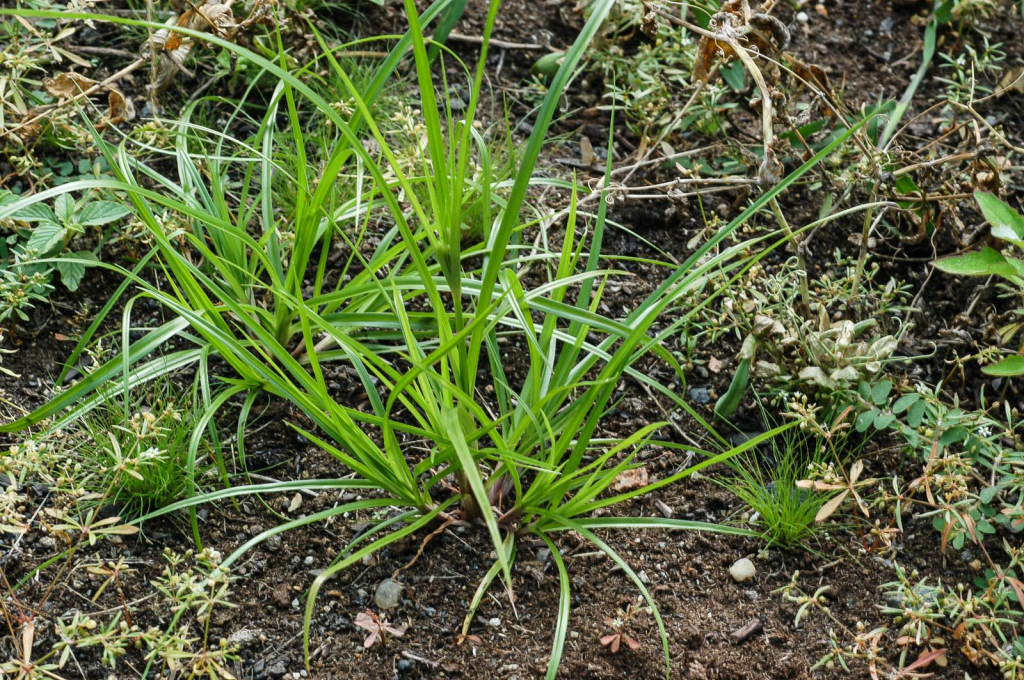
5. Nutgrass
- ID: Looks like a grassy tuft but with triangular stems (roll it between your fingers and you’ll feel it).
- Tip: Infamous for its underground nut-like tubers that make it almost indestructible.
💡My Urban Patch Take
I used to think weeds were just a nuisance – something to get rid of as fast as possible. But the more time I spend out here, the more I realise they’re simply part of the garden story. Chickweed popping up means the soil is rich and moist. Dandelions bring up minerals from deep down. Couch grass…well, okay, couch grass still drives me mad.
So this weekend, while I’m wrestling with the chickweed and muttering into the soil, I’ll also try to see it as a sign that the patch is alive, thriving, and maybe just a little bit too welcoming.
And if I end up eating some chickweed in a salad? Well, that’s just the garden’s way of saying cheers.
 The Urban Patch
Leave a comment