

Grow Guide: Growing Silverbeet in Your Urban Garden
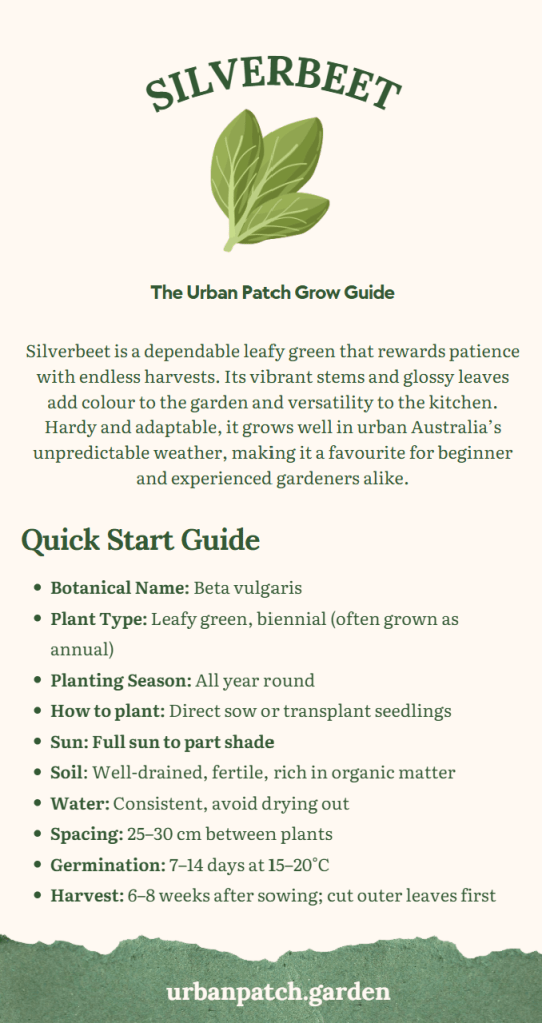
Silverbeet is a superstar of the urban edible garden. It’s incredibly versatile, highly nutritious, and remarkably forgiving – perfect for Melbourne’s temperamental spring and summer weather. The beautiful, glossy green leaves with colourful stems (white, yellow, or red) add a pop of colour to your garden and your plate. Unlike some leafy greens, silverbeet keeps producing throughout the season, so you can enjoy continuous harvests if you cut carefully.
🕰️Best Time to Plant
- Can be grown almost year-round in Melbourne and most Australian urban climates.
- Ideal months: early spring through autumn.
- Avoid the hottest part of summer to prevent bolting.
📍Where to Plant
- Choose a spot with 4–6 hours of sun daily; partial shade is fine.
- Works well in garden beds, raised beds, or containers.
- Protect from strong winds and provide partial shade in the hottest months if possible.
🧑🌾How to Grow
- Sowing: Plant seeds 1–2 cm deep. Space seedlings 5–10 cm apart and thin to 25–30 cm once established.
- Soil Prep: Enrich the bed or pot with compost or well-rotted manure. Silverbeet loves nutrient-rich soil.
- Succession Planting: Sow every 3–4 weeks to maintain a steady supply of fresh leaves.
- Silverbeet grows quickly, with seedlings emerging in 7–14 days under ideal conditions (15–20°C). Cutting outer leaves encourages continual growth and prevents the plant from going to seed too soon.
💧Watering & Feeding
- Watering: Keep soil consistently moist, especially in warmer months. Mulch around the base to retain moisture and suppress weeds.
- Feeding: Side-dress with compost or a balanced organic fertilizer every 4–6 weeks to keep leaves tender and prolific.
🍽️Harvesting
- Harvest outer leaves when they are 15–20 cm long, leaving the central growth point intact.
- For baby leaves, pick earlier for tender greens perfect for salads.
- Always cut leaves at the base rather than pulling to avoid damaging the plant.
- Silverbeet will keep producing for months if harvested correctly, giving you multiple pickings from the same plant!
😱Common Problems (and Fixes)
- Pests: Aphids, leaf miners, slugs, and snails are the usual culprits. Hand-pick or use organic sprays where necessary.
- Diseases: Downy mildew or leaf spot can appear in wet conditions. Improve air circulation, avoid wetting leaves, and remove affected foliage.
- Bolting: Excessive heat or stress can trigger flowering. Provide partial shade in summer and maintain consistent watering to slow bolting.
👋Best Companion Plants
- Onions & garlic → Deter pests that might chew on the leaves.
- Beans & peas → Fix nitrogen in the soil, boosting silverbeet growth.
- Brassicas (broccoli, cabbage, kale) → Silverbeet doesn’t compete heavily and fills gaps between them.
- Radishes → Grow fast and help loosen the soil around slower-growing chard.
💡My Urban Patch Take
Silverbeet is one of my go-to plants for urban gardening. It’s low-maintenance, resilient, and keeps giving, making it perfect for small city patches. Interspersed with other greens (e.g. lettuce), it’s a mini edible jungle that feeds us almost continuously. Even on Melbourne’s unpredictable days, a well-cared-for silverbeet patch feels like a tiny victory every time I cut a handful of leaves for dinner.
(Need a little refresher before getting started on your silverbeet journey? Check out my Urban Garden Beginner’s Guide: 4 Essentials to Get Growing Fast)
 The Urban Patch
Leave a comment