

Grow Guide: Growing Coriander in Your Urban Garden
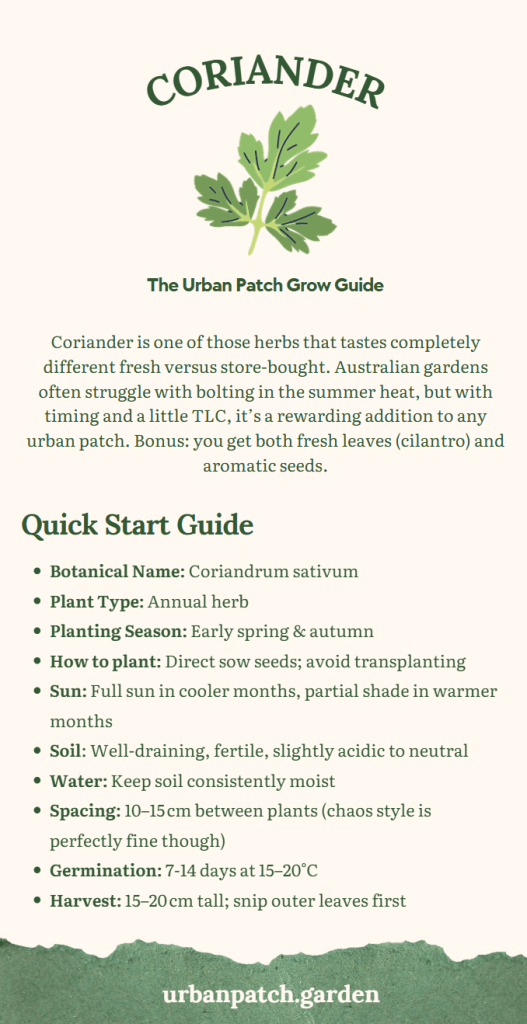
If you’ve ever tried to grow coriander in Melbourne and ended up with tall, spindly stems and no leaves, you’re not alone. Coriander has a reputation for being a little bit fussy – the Goldilocks of the herb world. Too hot and it bolts, too shady and it sulks. But with a few tricks, coriander can absolutely earn its place in your urban patch (and in your curries, stir-fries, and zesty salsa nights).
🕰️Best Time to Plant
- Autumn and early spring are coriander’s happy seasons. Catch the mild shoulder weather to give it time to grow leaves before the summer heat arrives.
- Avoid planting in the peak of summer – coriander will throw up flowers (bolt) faster than you can say “banh mi.”
- In winter, it grows a little slower, but you’ll still get a steady harvest of leaves.
📍Where to Plant
- Coriander loves full sun in cooler months and a bit of afternoon shade in warmer months.
- Great in pots, planters, or window boxes, so you can move it around if the sun gets too harsh.
- Make sure your soil is well-draining but rich. Coriander has surprisingly long tap roots for a herb, so go for a deeper pot rather than a shallow one.
🧑🌾How to Grow
- Sow directly – coriander hates being transplanted, so sprinkle seeds straight into the soil where you want them.
- Succession plant – sow a small batch every 2–3 weeks in autumn and spring for a continuous supply.
- Thin seedlings – once they sprout, thin to about 10–15cm apart so each plant has space to breathe.
💧Watering & Feeding
- Keep the soil consistently moist (not soggy) – coriander sulks if it dries out.
- A fortnightly feed with a liquid organic fertiliser will keep the leaves lush.
🍽️Harvesting
- Start picking leaves when the plants are about 15–20cm tall.
- Snip the outer leaves first and let the centre keep growing.
- If it bolts (sends up a flower stalk), don’t despair – let it go to seed. You can either:
- Collect the dried seeds for cooking, or
- Let them drop to the soil and self-seed for your next crop (chaotic, but fun).
😱Common Problems (and Fixes)
- Bolting: Normal in hot weather. Grow in the cooler months, or pick young leaves fast before it flowers.
- Slugs and snails: Young seedlings are especially tasty to them. Use crushed up egg shells, copper tape, or keep Odie on patrol 🐕.
- Yellowing leaves: Usually from not enough nitrogen – give it a feed.
👋Best Companion Plants
- Tomatoes & spinach → Coriander helps repel aphids, spider mites, and whiteflies.
- Carrots & beets → Attracts beneficial insects that improve their growth.
- Dill → Good synergy for attracting predatory insects, though both bolt quickly in hot weather.
- (Avoid: fennel — it inhibits growth.)
💡My Urban Patch Take
In my Brunswick patch, coriander is a bit of a seasonal guest. I never try to force it through summer – it just doesn’t like it. Instead, I treat it as a cool-weather hero, planting it thickly in autumn. By the time I’m making warming curries in winter, I’ve got fresh coriander ready to go. And when it finally flowers? The pollinators love it, and I get to pocket a jar of fragrant coriander seeds. Win-win.
(Need a little refresher before getting started on your coriander journey? Check out my Urban Garden Beginner’s Guide: 4 Essentials to Get Growing Fast)
 The Urban Patch
Leave a comment